
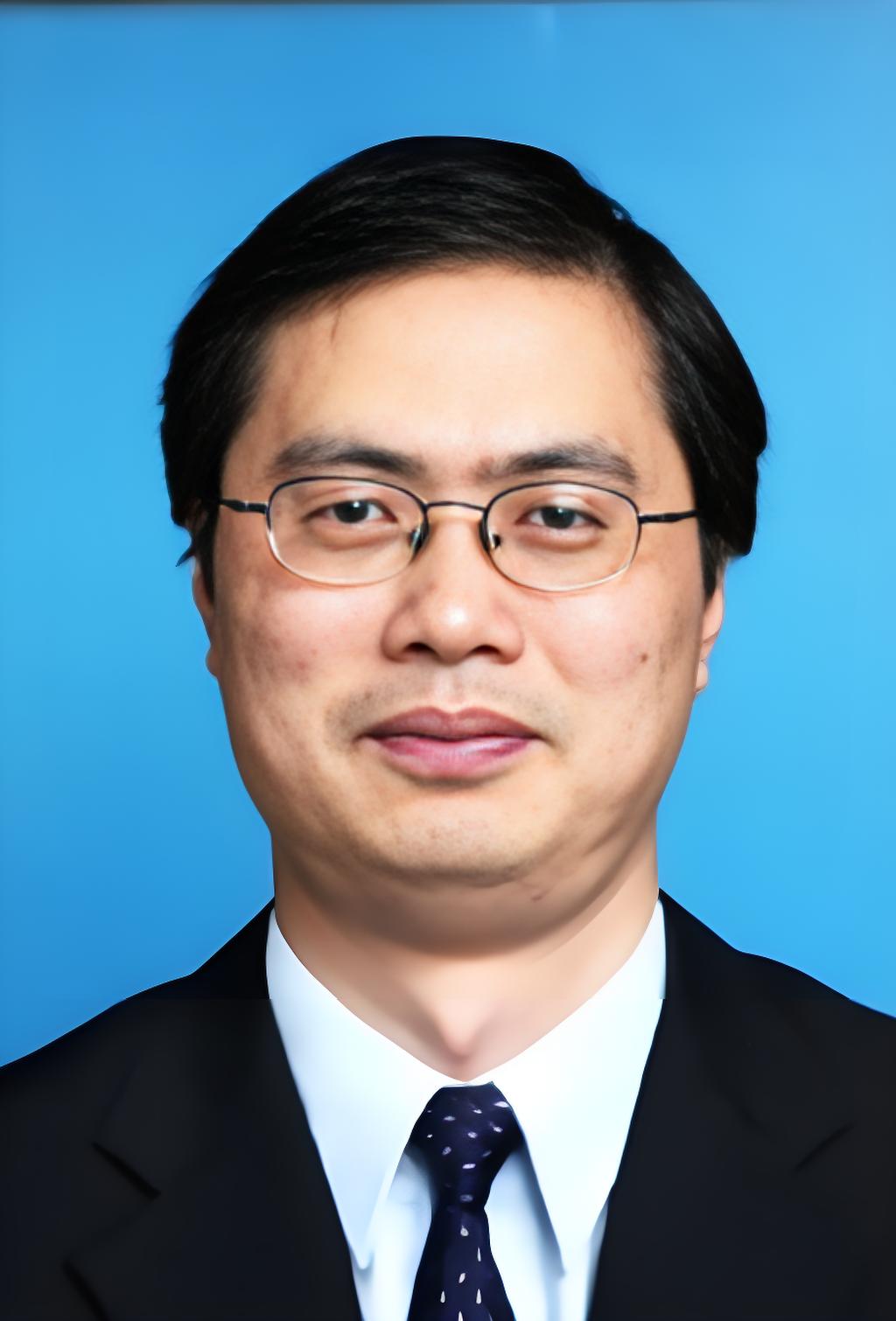
Prof. Shengyuan Xu, Nanjing University of Science and Technology, China
Bio: Shengyuan Xu, an expert in automatic control and a Fellow of the Chinese Association of Automation, is a professor and doctoral advisor at the School of Automation, Nanjing University of Science and Technology. Xu Shengyuan was admitted to the Department of Mathematics at Hangzhou Normal College in 1986; he received a Bachelor of Science degree in 1990; in 1993, he was admitted to Qufu Normal University to pursue a master’s degree in cybernetics; he received a Master of Science degree in 1996; and in 1999, he received a Doctor of Engineering degree from Nanjing University of Science and Technology; From December 2000 to November 2001, he conducted postdoctoral research at the University of Leuven in Belgium; from December 2001 to September 2002, he conducted postdoctoral research at the University of Alberta in Canada; From September 2002 to September 2003, he served as a William Mong Young Research Fellow at the University of Hong Kong; in 2006, he received funding from the National Science Fund for Distinguished Young Scholars; in 2025, he was honored with the title of Fellow of the Chinese Association of Automation. Xu Shengyuan’s research focuses primarily on robust control and filtering, generalized systems, and the control of nonlinear and time-delay systems. He has conducted research in areas such as time-delay-related stability, robust control, and state estimation.

Researcher Zhongkui Li, Peking University, China
Bio: Zhongkui Li received his bachelor’s degree from the National University of Defense Technology in 2005 and his Ph.D. from Peking University in 2010. He is currently a research fellow and Ph.D. advisor in the Department of Mechanics and Engineering Sciences at the School of Engineering, Peking University. His research focuses on interdisciplinary areas at the intersection of artificial intelligence and automatic control, including distributed cooperative control and decision-making, and unmanned swarm systems. He has published one monograph in English and more than 60 journal articles. He currently serves as an Associate Editor for SCI-indexed journals such as *IEEE Transactions on Automatic Control* (a top-tier journal in the field of control) and *Nonlinear Analysis: Hybrid Systems* (one of the official journals of IFAC), as well as on the editorial boards of Chinese journals including the *Journal of Aeronautics*, *Control and Decision*, and *Space Control Technology and Applications*. He has been selected as a recipient of the National Outstanding Doctoral Dissertation Award (2012), the Ministry of Education’s Young Changjiang Scholar (2017), the Beijing Science and Technology Rising Star (2018), a Clarivate Highly Cited Researcher (2018), a Beijing Outstanding Young Scientist (2020), and an Elsevier China Highly Cited Scholar (2020). He has received the Second Prize of the National Natural Science Award (2015; ranked third), the Second Prize of the 4th Yang Jiaci Science and Technology Award, the Best Paper Award from *IET Control Theory & Applications* (2013), and the Best Paper Award from *Systems Science* (2009–2011), among other honors. In terms of teaching and education, he received the Peking University Excellence in Teaching Award and the Peking University–BOE Teaching Award in 2021. Three graduate students he advised received the National Graduate Scholarship, and one was named one of the “Top Ten Academic Talents” in the School of Engineering. Students under his guidance have been nominated for awards such as the Zhang Siying Outstanding Young Paper Award and the IEEE ICCA Best Student Paper Award.

Prof. Xiwang Dong, Beihang University, China
Bio: Xiwang Dong is the Blue Sky Distinguished Professor (Level 2) and doctoral advisor at Beihang University; Director of the Institute of Unmanned Systems at Beihang University; Executive Vice Dean of the School of Artificial Intelligence at Beihang University; Deputy Chief Engineer for Artificial Intelligence at the Shenyang Aircraft Design Institute of the Aviation Industry Corporation of China (AVIC); and Deputy Secretary-General of the China Command and Control Society. He is a National Leading Talent, a recipient of the Ministry of Industry and Information Technology’s Outstanding Young Scientist Award, the Beijing Municipal Outstanding Young Scientist Award, and the National Excellent Young Scientist Award. Since December 2025, he has concurrently served as Executive Vice Dean of the School of Artificial Intelligence at Beihang University. He has long been engaged in research on swarm intelligence, cooperative guidance and control, collaborative decision-making and planning, and unmanned aerial vehicle (UAV) swarms, emphasizing both theory and practice. He has developed a swarm intelligence cooperative verification platform based on UAVs and unmanned ground vehicles (UGVs) and conducted a series of experimental validations. His work has supported the completion of UAV swarm high-speed traversal flight missions in three consecutive editions of the “Unmanned Challenge” competition, achieving the best results in each and securing consecutive championships in the fixed-wing swarm category. As first or corresponding author, he has published over 100 SCI-indexed papers in journals such as IEEE TAC and TCST, as well as internationally renowned journals like *Automatica*. His work has accumulated over 8,000 SCI citations. He has consistently been listed as an Elsevier Highly Cited Chinese Scholar and among the top 2% of scientists worldwide. He has published five monographs in both Chinese and English through Science Press, Springer, and Taylor & Francis, and holds over 80 authorized or pending national invention patents. He has received numerous awards and honors, including the First Prize of the Natural Science Award from the Chinese Association of Automation; the First Prize for Technological Invention, the First Prize for Scientific and Technological Progress, the First Prize for Innovation, and the Young Scientist Award from the Chinese Society of Command and Control; the First Prize for Technological Invention from the China Invention Association; and the Wu Wenjun Artificial Intelligence Outstanding Young Scientist Award. He serves on the editorial boards of several internationally renowned journals, including *IEEE Transactions on Cybernetics*, *IEEE Robotics and Automation Letters*, and *Unmanned Systems*, as well as acting as associate editor or editorial board member for numerous flagship journals in the field, such as the *Journal of Command and Control*, *Modern Defense Technology*, *Navigation, Positioning, and Timing*, *Aviation Weapons*, *Aerospace Control*, and the *Journal of Astronautics*.

Prof. Hao Shen, Anhui University of Technology, China
Bio: Hao Shen is a National High-Level Young Talent, a professor at Anhui University of Technology, a doctoral advisor, Director of the University Party Committee’s Faculty Affairs Department and Director of the Human Resources Office, Director of the Anhui Provincial Research Center for Common Technologies in Intelligent Industrial Enterprises, a council member of the Chinese Society of Management Science and Engineering, and a recipient of the Anhui Provincial Outstanding Young Scholars Fund. For several consecutive years, he has been listed as an ESI Highly Cited Scientist and on the Elsevier-Shanghai Ranking China Highly Cited Scholars list; His research achievements have earned him seven second-class or higher government science and technology awards from Anhui, Shanghai, Henan, and the Chinese Association of Automation (among which he received the First Prize in Natural Sciences of Anhui Province as the lead researcher), one Special Prize for Postgraduate Teaching Achievements in Anhui Province (as the lead researcher), and one First Prize for Teaching Achievements in Anhui Province (as the lead researcher). He has also been honored with the National Baosteel Outstanding Teacher Award, the Anhui Provincial Government Special Allowance, and the Anhui Youth May Fourth Medal. He serves in an ad hoc capacity as an evaluation expert for national high-level talent programs, the China “Science Exploration Award,” national and provincial/ministerial-level science and technology achievement awards, and national-level research project evaluations. His primary research areas include advanced control technologies and their application in DC/DC power converters; networked analysis and control of power systems; modeling and optimal control of stochastic hybrid systems; synchronization and cooperative control of multi-agent systems and their applications; digital twins and the Industrial Internet; and intelligent robots and control.

Prof. Yuanqing Wu, Northeastern University, China
Bio: Yuanqing Wu, male, born in 1985, is a tenured full professor (Level 3) and doctoral advisor at the School of Intelligent Engineering, Sun Yat-sen University. He serves as a member of the General Expert Group and the 2024 Guidelines Expert Group for the “Industrial Software” Key Special Project under the National Key Research and Development Program; Principal Investigator of the “Intelligent Robotics” Key Special Project under the National Key Research and Development Program; recipient of the National Excellent Young Scientist Award (2019); Principal Investigator of a Joint Key Project funded by the National Natural Science Foundation of China; Leader of the Guangdong Provincial Outstanding Young Research Team; recipient of the Guangdong Provincial Outstanding Young Scientist Award; Guangdong Provincial Young Pearl River Scholar; and Associate Editor of the *International Journal of Robust and Nonlinear Control*. His research interests include multi-robot systems, artificial intelligence, and industrial software. He has led a total of 9 national, provincial, ministerial, and municipal-level projects; published over 70 SCI-indexed journal articles, including 3 in *TAC* and 2 in *Automatica*; authored 2 English-language monographs (published by Springer); and filed 52 invention patent applications, with 24 granted.